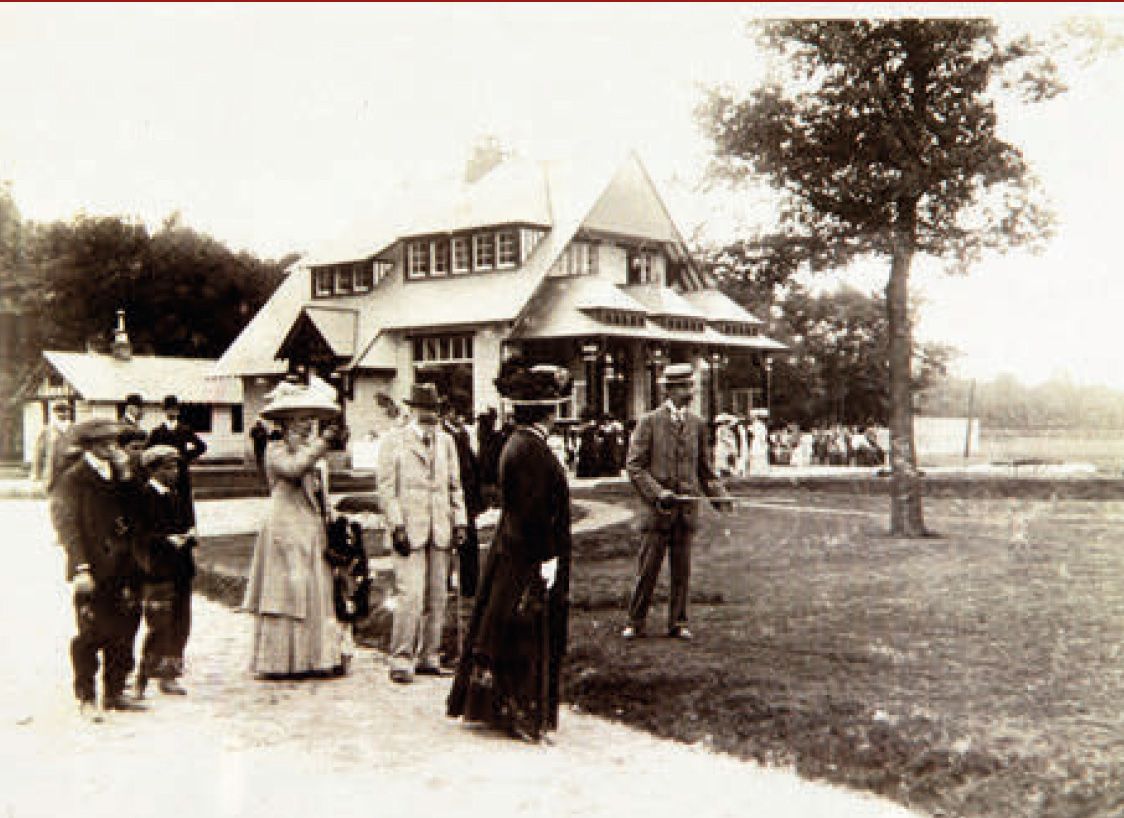
By the early 20th century, the town of Chantilly was already a major center for horse breeding. Attracted by the emergence of a sport from across the Channel, several stable owners began searching for a place to take up this new, fashionable activity: golf.
At the initiative of Baron Edouard de Rothschild, a group of prominent figures gathered on February 3, 1909, to form the Société anonyme du Golf de Chantilly, which was to operate the facility. As the legatee of the Duke of Aumale, owner of the vast Chantilly Estate, the Institut de France leased a plot of land in the commune of Vineuil-Saint-Firmin, well-suited for the game of golf.
Chaired by Prince Joachim Napoleon Murat, great-grandson of the famous Marshal of the Empire, the newly formed company enlisted the services of one of the greatest champions of his era, ...
the Englishman John Henry Taylor, to design in record time a course immediately recognized as one of the best in France.
After only four years in existence, the Chantilly Golf Club hosted the French Open in 1913. This marked the beginning of a fruitful relationship with the major tournament, a connection that has never wavered since. Attendance was also strong, but just as the club was beginning to reap the benefits, World War I broke out…
This was the first major blow for the club, which saw 34 of its members and employees fall in battle. After the war, English architect Tom Simpson was chosen to renovate the course. Thus, in 1920, certain holes emerged that would make “Vineuil” famous.
In the interwar years, membership surged once again. Consequently, a second course—Le Canal—was created in 1929, though it did not survive World War II…
Key Dates in the History of the
Chantilly Golf Club
1909
The Société anonyme du Golf de Chantilly is founded, chaired by Prince Joachim Napoleon Murat. The design of the course is entrusted to English champion J.H. Taylor.
1913
The 1st French Open is won by George Duncan.
1920
Architect Tom Simpson is commissioned to renovate the course after the end of World War I.
1925
The 2nd French Open is won by Arnaud Massy.
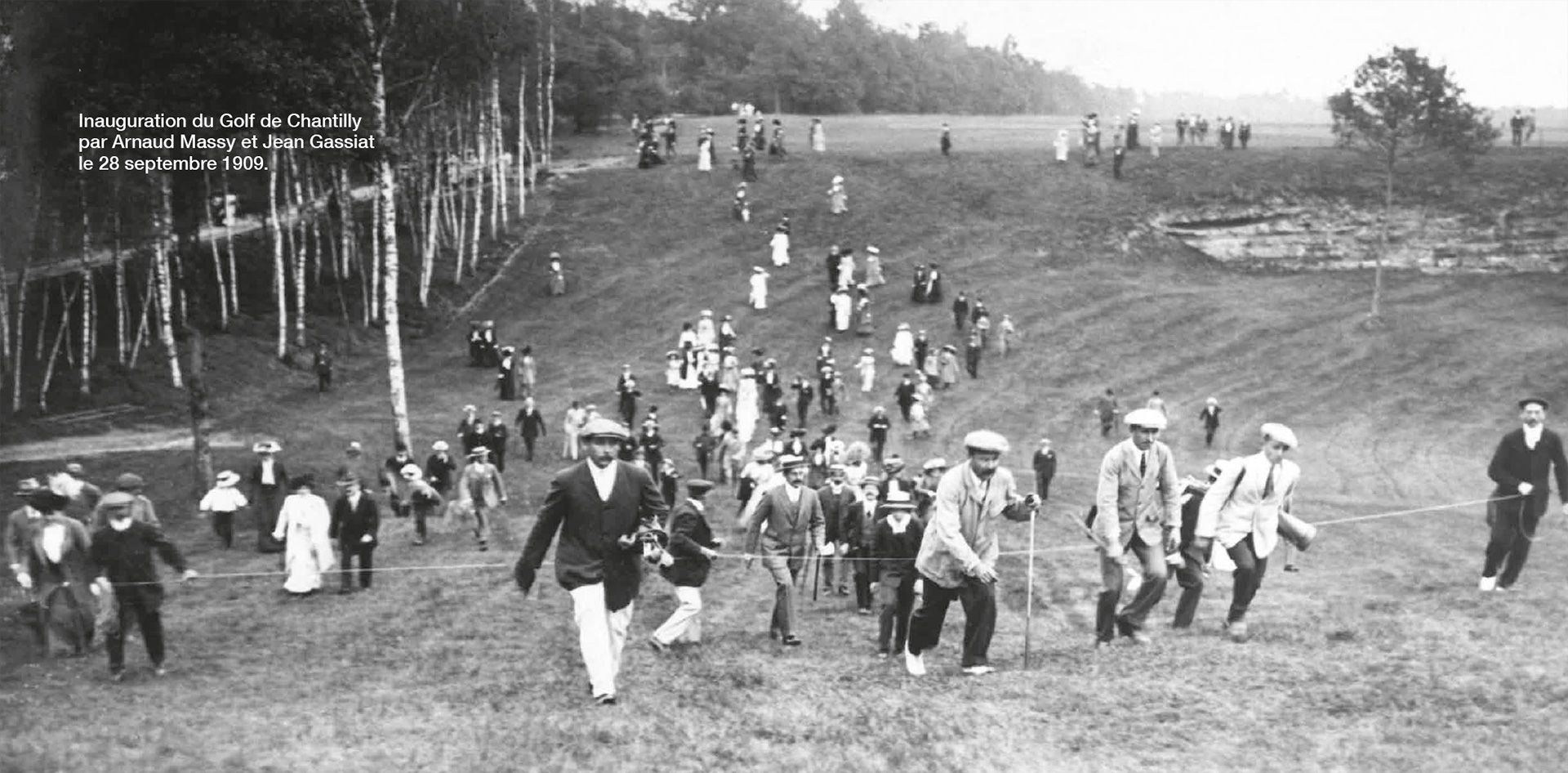
Inauguration of the Chantilly Golf Club by Arnaud Massy and Jean Gassiat on September 28, 1909
1929
Inauguration of the second course, known as the Canal Course, designed by Tom Simpson.
1932
Baron Edouard de Rothschild becomes club president upon the death of Prince Murat.
1933
The 3rd Open is won by Bert Gadd.
1937
The 4th Open is won by Marcel Dallemagne.
1941
Mr. André Thibaud is elected president.
1944
Allied bombing damages the clubhouse and the course.
The Canal course is permanently abandoned; renovation work is carried out on the Vineuil course.
1947
The 5th Open is won by Henry Cotton.
1950
The 6th Open is won by Roberto de Vicenzo.
1951
Opening of the 9-hole Longères course.
1959
The club celebrates its 50th anniversary.
1962
Mr. Robert d’Eichthal is elected president.
1963
Opening of the first Youth Center.
1964
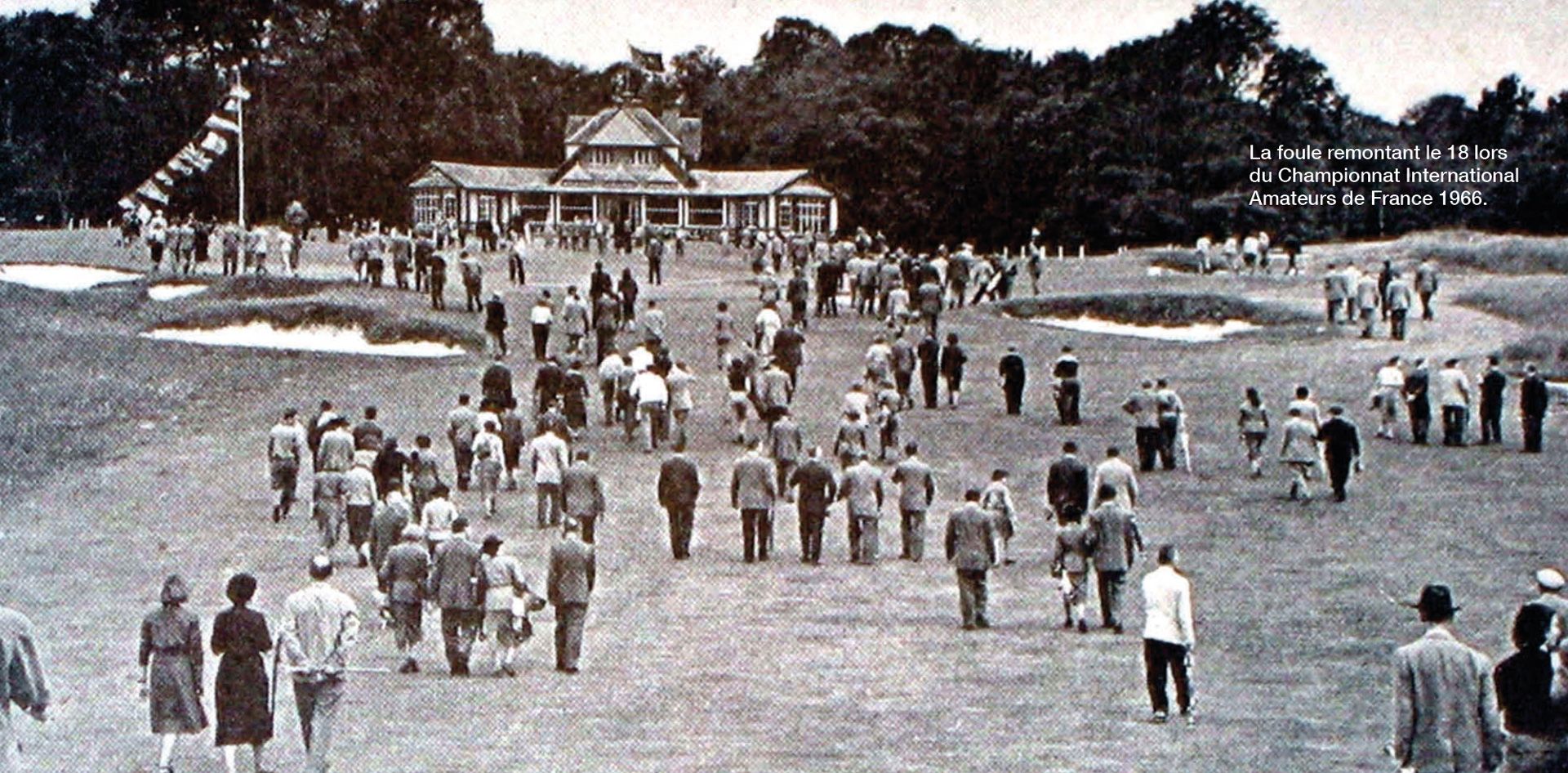
The 7th Open was won by Roberto de Vicenzo.
1972
Captain Jean-Louis Dupont and his team won the first of their seven Gounouilhou titles (1972, 1974, 1975, 1976, 1978, 1982, 1985).
1974
Mr. Pierre Nicolas is elected president. 8th French Open won by Peter Oosterhuis.
1980
Mr. Jean-Louis Dupont is elected president.
1983
European Amateur Team Championship won by Ireland.
1984
The club celebrates its 75th anniversary.
Alexis Godillot wins his 5th and final French International at Chantilly
1988
The 9th French Open is won by Nick Faldo.
1989
The 10th French Open is won by Nick Faldo.
In reality, after becoming an association, the entire club nearly disappeared: the Vichy regime’s anti-Semitic laws, the Germans stripping the turf, the Allied bombing… the Cantilian golfers were spared nothing. It took the perseverance of certain men, including Henri Balézeaux—the club’s true driving force since its founding—for the organization to rise from the ashes.
By 1947, the French Open returned to the course: not everything had been fully rebuilt yet—far from it—but golfing life had resumed. It even flourished anew during the “Trente Glorieuses,” a period that proved no less glorious for the club. The association continued its revival by adding an additional 9-hole course in 1951, “Les Longères.”
In competition, members continued to fly the club’s colors high. André Marino Vagliano, along with his successors Jacques Léglise and Michel Carlhian, witnessed the emergence of the young Jean-Louis Dupont.
His exploits on the greens seemed secondary compared to his exceptional career as a leader. The sporting laurels fell instead to his spiritual son, Alexis Godillot, the last great French amateur champion.
Behind the scenes, first on the Sports Committee and then as president, a position he assumed in 1980, Jean-Louis Dupont propelled Golf de Chantilly into a new era while preserving certain traditions. The most iconic of his decisions—and by no means the least significant given the intensity of the debates—was the 1991 expansion of the course to 36 holes.
Today, the Golf de Chantilly is perfectly prepared to meet the expectations of golfers, but also and above all to meet the challenges of tomorrow. Just as it has always done throughout its long and fabulous history.
1990
The 11th and final French Open, won by Philip Walton.
1991
Opening of the 18-hole Les Longères course. The Chantilly Golf Club now has two courses.
2002
Alexis Godillot is elected president.
2009
The club celebrates its centennial. Victor Dubuisson wins the European Individual Championship.
2010
Mr. Pierre Bechmann is elected president
2012
Mr. Pierre Bechmann becomes Captain of the Royal & Ancient Golf Club of St. Andrews.
2015
Mr. Laurent Bailly is elected president.
2016
European Team Championship won by Scotland.
2017
Architect Martin Hawtree is commissioned to renovate holes 1, 9, 10, 11, and 18 at Vineuil. After a 32-year drought, the club returns to victory at Gounouilhou.
2019
European Boys Team Championship won by France.